Google Search clicks
More than two times
- Previous 3 months
- 5,484
- Latest 3 months
- 10,992
Five established hospitality clients
Booking, sales and operations platforms
Built around how your business already works, so you win more customers with less admin.
Google Search clicks
More than two times
Five established hospitality clients
Our own operations
Ten people to two
People for the same workload
Google Search Console, 14 July–13 October 2026, compared with the previous three months. 10 → 2 comes from the platform that runs Clearline’s own operations. Results vary.
Read client stories01Client work
All live
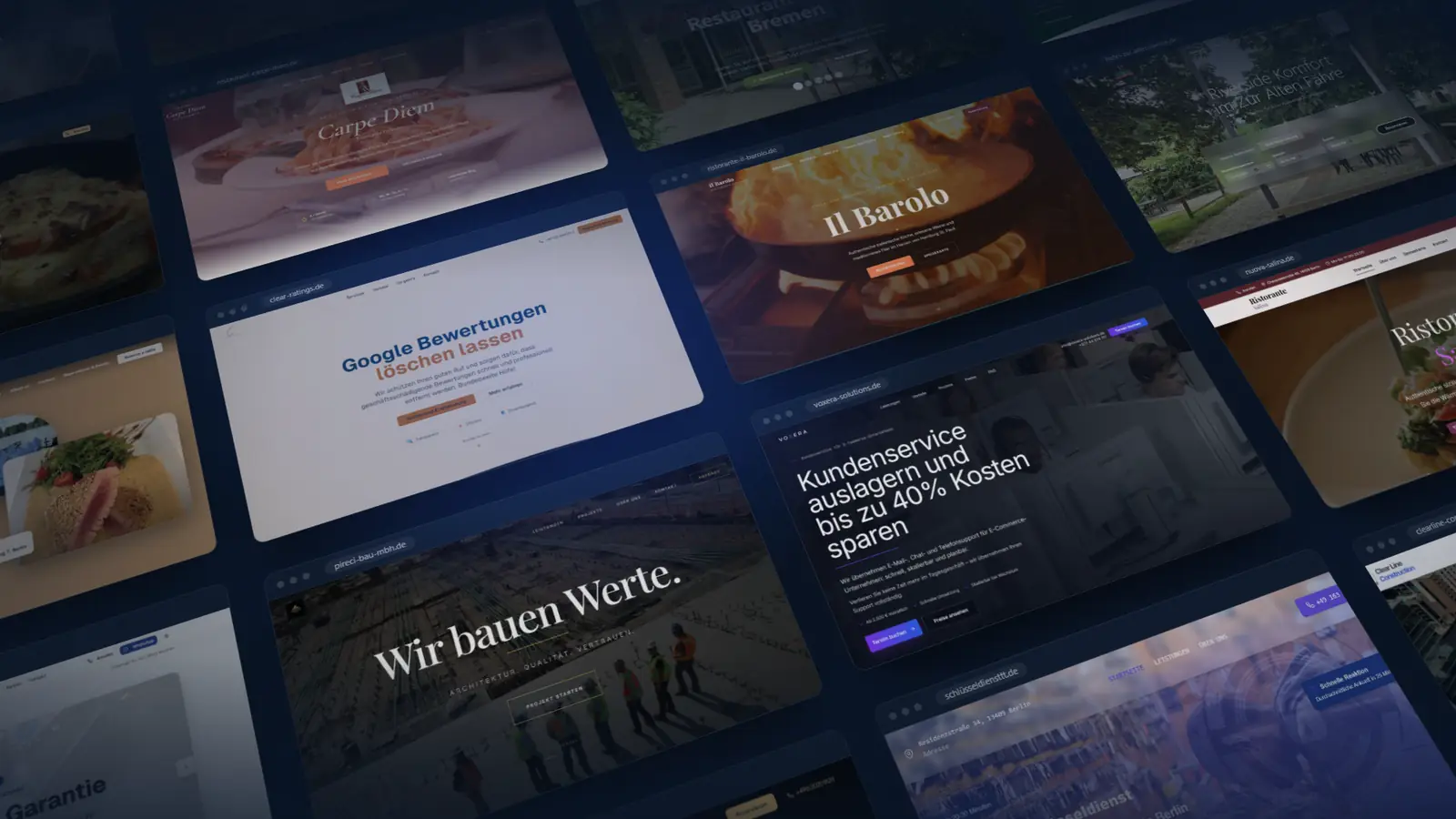
Every project shown here is live. Open any of them. Strategy, design and engineering by Clearline Tech.
See all client platforms
Restaurants & Hospitality
Delivered capabilities
Restaurants & Hospitality
Delivered capabilities
Phone Repair
Delivered capabilities
Restaurants & Hospitality
Delivered capabilities
Restaurants & Hospitality
Delivered capabilities
Corporate Holdings
Delivered capabilities
Restaurants & Hospitality
Delivered capabilities
How it works
Customer experience
The right action, at the right moment
Book or enquireNew request
ReadyOperations
Automate the repeatable. Keep people in control.
Attract: The right customer finds a clear offer and a direct next step.
02What we build
Most businesses have one bottleneck: customers who can’t book easily, too few new enquiries, or a team buried in admin. Start with that one. Each platform connects to the next when you’re ready.
Turn attention into action.
Bookings, orders, quotes or service requests, designed around how your customers decide and connected to what your team does next.
Best fit
Turn expertise into compounding demand.
Get found on Google by the customers you want. We plan the search structure, write and publish the content, track what brings in enquiries, and keep improving it.
Best fit
Increase output without multiplying headcount.
Requests, approvals, messages and reports move through one system instead of inboxes and spreadsheets. The routine runs itself; your people make the decisions.
Best fit
03Scope and investment
Before any build starts, you get a written proposal: what we’ll build, what it should change, how we’ll measure it, and what it costs to run.
Customer journey, product architecture, interfaces, action paths, integrations, analytics and handover.
Performance baseline, demand architecture, content system, reporting and agreed improvement capacity.
Workflow rules, systems, roles, exceptions, permissions, automation, measurement and handover.
Every proposal will explicitly define:
04Delivery
At every stage you see what we’re aiming for, what we decided and what changed.
Define the constraint, baseline and target.
Model the customer journey, operating workflow and platform architecture.
Implement the platform, integrations, controls and reporting.
Validate the agreed result, document ownership and establish the next measurement point.
05Who you work with
Direct access to the people responsible for strategy, product, engineering and improvement. No handoff maze.

Mehmet Sahiti
Chief Executive Officer

Xhevdet Dushica
Chief Operating Officer

Herolind Luzha
Chief Technology Officer

Rina Korca
Lead Developer
06Questions
A customer-facing or internal system designed around your specific operating model. It may manage demand, bookings, sales, service requests, workflows, reporting—or connect several of them.
No. We first determine which systems should remain, which should connect and which constraint actually requires something new.
No. AI is used only where it improves a defined task. Reliable rules and conventional automation remain the better choice for many predictable processes.
Before implementation, we define the baseline and the result that matters: qualified demand, completed actions, processing capacity, response time, manual steps or another observable business measure.
It can cut manual work sharply. On the platform that runs our own operations, two people now handle what took ten. What you do with the time it frees up is your call.
Customer and Operations Platforms have a fixed project price once scope is agreed. Growth Engines run as an ongoing plan. Hosting, licences and other running costs are listed separately in every proposal.
Ownership, access, usage rights, source materials, data and third-party dependencies are defined in the agreement and documented at handover.
We compare the result with what we measured at the start, agree on support, and only suggest the next step when the numbers back it up.
A question we have not covered?
Write to us or start with a focused conversation.
07Next step
Too few enquiries, bookings that slip through, a team stuck on admin: bring us the problem. We’ll show you where a platform would make the biggest difference, and how we’d measure it.
Prefer to write? contact@clearline-ai.tech
Senior people, close to the work.